This post belongs to Atlantis Is Everywhere, a series exploring why the story of Atlantis has been repeatedly mapped onto real places around the world. Rather than arguing for or against any location, the series documents how each claim emerged, what evidence is cited, how it is interpreted, and where the research stands today.
Malta sits in the central Mediterranean between Sicily and North Africa. It is small, limestone-based, and resource-limited. There are no forests suitable for large shipbuilding, no major rivers, and no extensive mineral deposits. What it does have is position. Malta lies along maritime corridors that have linked the eastern and western Mediterranean since prehistory.
Its size immediately constrains grand speculation. There is no room here for a continent-scale power. Yet Malta continues to appear in Atlantis discussions for a different reason altogether.
Its monuments are early.
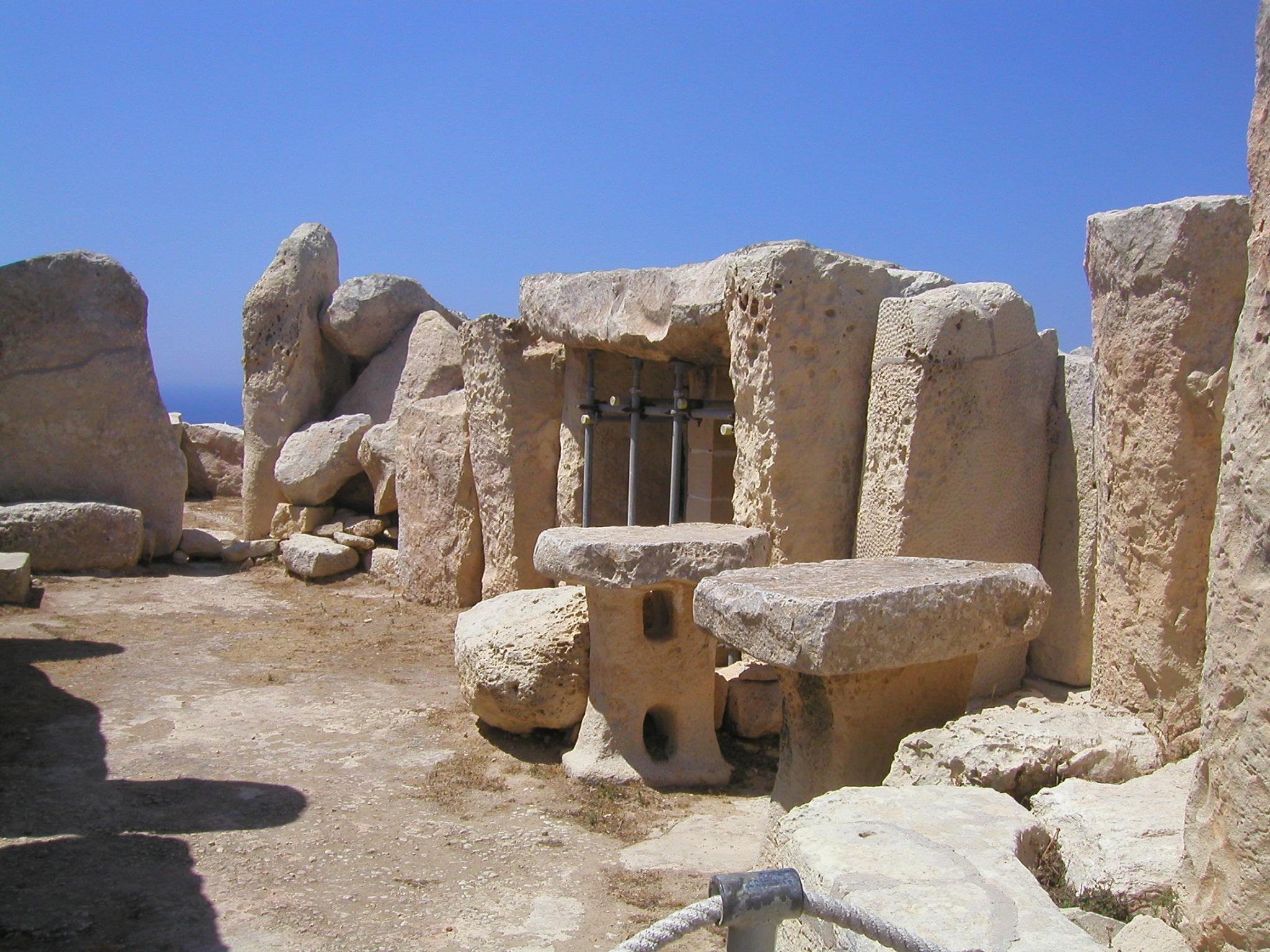
Between approximately 3600 and 2500 BCE, Malta’s inhabitants constructed a series of large stone temple complexes, including Ġgantija, Ħaġar Qim, Mnajdra, and Tarxien. These structures predate the Great Pyramid of Giza and Stonehenge. They are among the earliest known freestanding monumental stone buildings in the world.
This chronological position unsettled early archaeology and still draws attention today.
The temples are not improvised enclosures. They follow consistent architectural patterns: apsidal chambers radiating from central corridors, carefully fitted limestone blocks, formal entrances framed by trilithons, and internal altars and niches. Some stones weigh several tons. Transport and placement required coordinated labor and planning. There is no evidence of metal tools or wheeled transport at the time of construction.
Several temples show clear astronomical alignment. The lower temple at Mnajdra aligns with solstitial sunrises. Doorways frame seasonal light effects. These orientations suggest intentional calendrical awareness embedded in ritual architecture.
What Malta presents, therefore, is not mystery in the sense of unknown builders. Archaeology clearly identifies a Neolithic farming population with distinctive pottery, burial practices, and settlement patterns. The question is scale and timing. How did a small island population sustain such monumentality for over a millennium?
The temple-building phase eventually ended. By around 2500 BCE, large-scale temple construction ceased. Subsequent cultural phases show different material patterns. There is no widespread destruction layer. No clear invasion horizon. No evidence of abrupt annihilation. The shift appears gradual.
This transition has invited speculation.
One line of interpretation emphasizes environmental stress. Malta’s soils are thin and vulnerable to erosion. Deforestation for agriculture and construction could have degraded productivity. Climatic fluctuations may have compounded strain. A small island ecosystem can sustain complex ritual construction only so long before resource limits tighten.
Another line of interpretation considers isolation. As sea levels stabilized after earlier Holocene rise, Malta remained separated from larger landmasses. Maritime contact likely persisted, but resilience on a small island is inherently constrained. A decline in external exchange networks could have amplified internal vulnerability.
A more speculative interpretation ties Malta indirectly to Atlantis through paleogeography. During the late Pleistocene, lower sea levels expanded coastal shelves across the Mediterranean. Although Malta itself would not have been dramatically larger during the temple period, surrounding coastlines across Sicily and North Africa were broader. Some have suggested that submerged coastal settlements elsewhere in the region may represent portions of a now-lost maritime landscape, with Malta as one surviving high point.
This interpretation reframes Malta not as Atlantis itself, but as a remnant of a wider prehistoric network partially erased by rising seas.
The appeal of that framing lies in its plausibility. We know sea levels rose dramatically after the Last Glacial Maximum. We know early settlements clustered near coastlines now underwater. We also know that underwater archaeology remains incomplete.
The limitations are structural.
Plato describes Atlantis as a large island beyond the Pillars of Heracles, possessing a vast plain, concentric urban planning, irrigation systems, and imperial ambition. Malta lies well within the Mediterranean. It lacks extensive plains. There is no evidence of canal systems or large-scale urban centralization. The temple complexes are ritual structures, not administrative capitals.
Chronology presents another constraint. Plato situates Atlantis thousands of years before his own time. Malta’s temples date to the fourth and third millennia BCE. Even if Plato’s chronology is treated flexibly, alignment requires compression or reinterpretation.
The strongest version of the Malta hypothesis therefore rests not on direct identification, but on thematic resonance. Malta demonstrates that complex symbolic architecture existed earlier than older models once allowed. It demonstrates that small populations could coordinate sustained monument-building without metallurgy or writing. It demonstrates that cultural florescence can end without spectacular destruction.
In that sense, Malta does not resemble Atlantis structurally. It resembles the type of society that later generations might misunderstand in scale or reinterpret through narrative expansion.
Archaeology supports a picture of innovation followed by adaptation and decline within environmental limits. There is no evidence of sudden submergence or cataclysmic collapse. The temples endured. The builders changed.
Malta matters in the Atlantis discussion not because it fits Plato closely, but because it destabilizes assumptions about when and where monumentality was possible. It widens the window of prehistoric complexity. For some, that widening invites speculation about larger lost systems. For others, it reinforces the capacity of known Neolithic societies.
Malta narrows Atlantis by grounding early complexity in documented evidence. It removes the need to invoke lost continents to explain sophisticated stonework. At the same time, it reminds us how much of the prehistoric Mediterranean coastline remains unexplored beneath the sea.
From Malta, the series moves to a different kind of case. Not an island where monumentality faded gradually, but a city whose destruction is recorded in both geology and history. When catastrophe is visible rather than inferred, the Atlantis comparison changes again.
Leave a Reply